
Sortase A Inhibitors for Addressing Antibiotic Resistance in MRSA
Author: Ungyu Lee and Namchul Ha
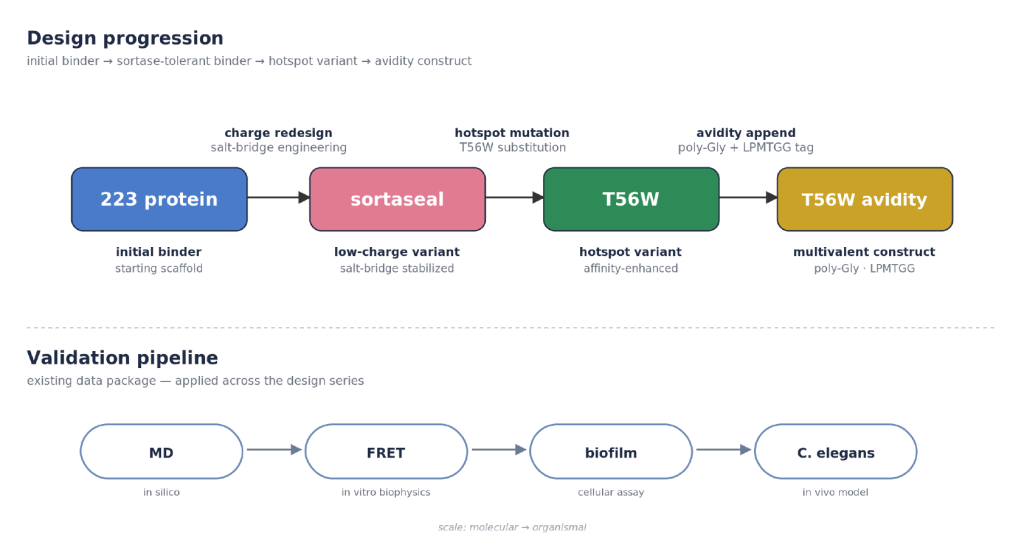
Figure 1. Design and validation workflow from parent binder to Sortaseal, T56W, and the multivalent T56W avidity construct.
Concise summary for WordPress
1. What was designed?
- Parent 223 was used as the starting SrtA-targeting scaffold.
- Sortaseal was designed as a lower-charge, salt-bridge-stabilized variant.
- T56W was introduced as a hotspot variant with stronger biochemical inhibition in the FRET assay.
- T56W avidity added a poly-Gly / LPMTGG format to explore multivalent rebinding and SrtA-mediated self-ligation.
2. Surface-charge redesign made the binders more neutral
- Parent 223 carried a simple total net charge of -2 and an exposed net charge of -3.
- Sortaseal and T56W were both neutral by charged-residue count: total net charge 0 and exposed net charge 0.
- APBS surface analysis showed a large reduction in strongly charged surface area: Parent 223 had 21.7% of sampled surface points at |V| >= 3 kBT/e, whereas Sortaseal and T56W each showed 5.6%.
- The most visible reduction was in negative high-potential patches, which decreased from 17.9% in Parent 223 to 3.1% in Sortaseal and 4.8% in T56W.
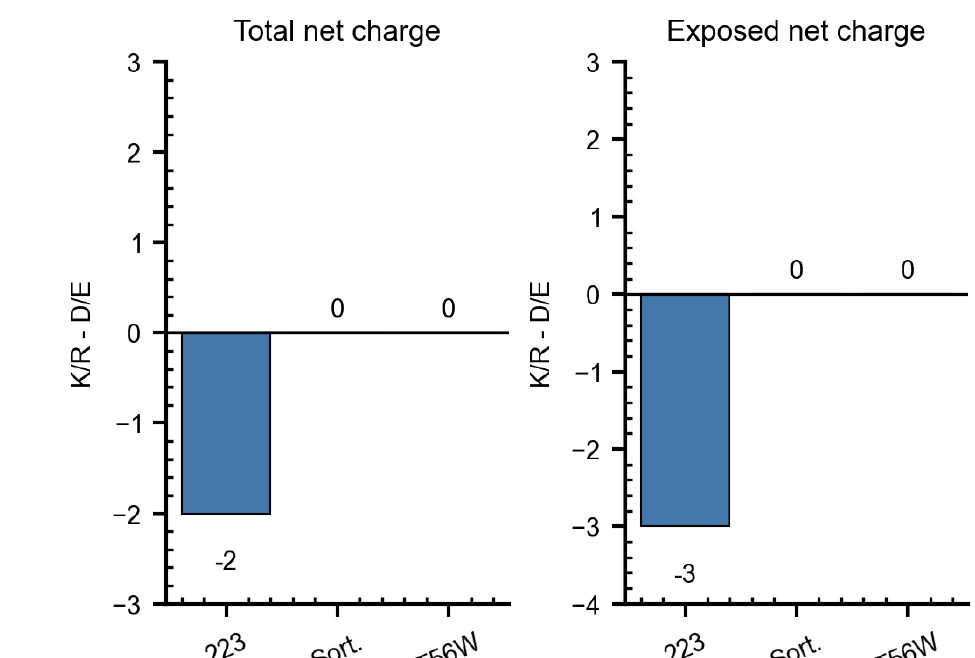
Figure 2. Surface-charge redesign neutralized the total and exposed net charge of Sortaseal and T56W.
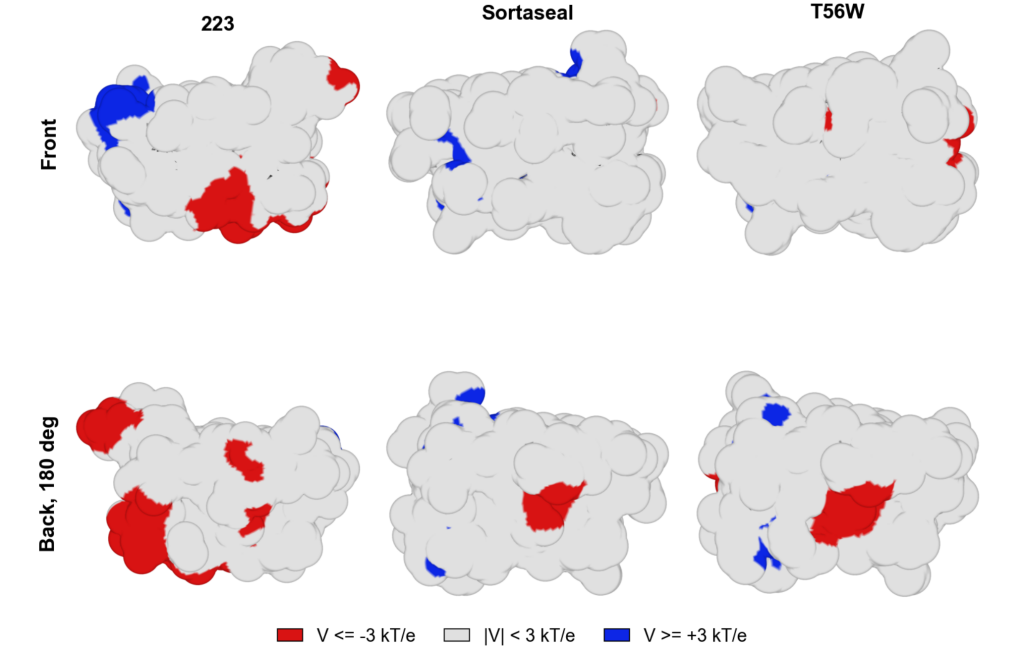
Figure 3. APBS surface maps show that redesigned binders greatly reduce strongly charged surface patches.
3. The redesigned salt bridges remained stable in simulation
- Five independent 200 ns MD simulations were performed for each redesigned construct.
- During the 50-200 ns analysis window, the intended Arg-Asp salt bridges stayed highly occupied: 97.22 +/- 5.85% for Sortaseal R135-D53 and 96.64 +/- 6.80% for T56W R140-D53 at the primary 0.40 nm cutoff.
- The mean N-O distances were close to 0.30 nm, and the conclusion was robust under 0.35 and 0.45 nm sensitivity cutoffs.
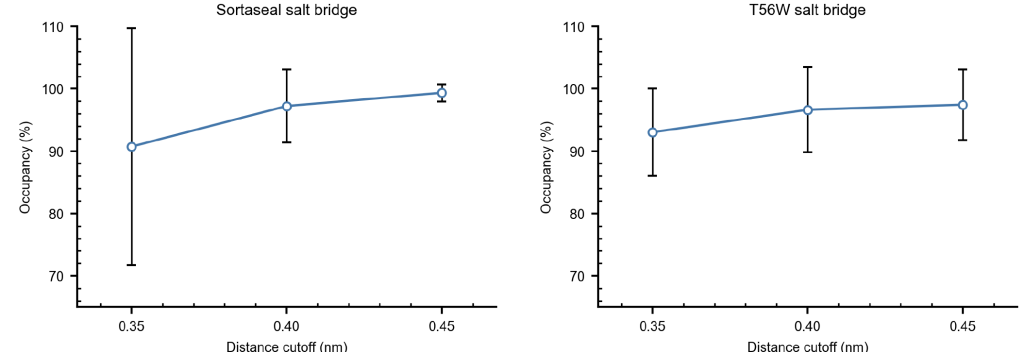
Figure 4. Designed Arg-Asp salt bridges remained highly occupied across molecular dynamics simulations.
4. The SRTA series inhibited SrtA activity in a FRET assay
- All three constructs reduced cleavage of a DABCYL-LPETG-EDANS FRET substrate in a dose-dependent manner.
- Sortaseal showed a relative IC50 of 70.36 uM, while T56W improved the fitted value to 37.11 uM.
- T56W avidity shifted the apparent IC50 further to approximately 29.3 uM and reached 73.19% inhibition at 81 uM.
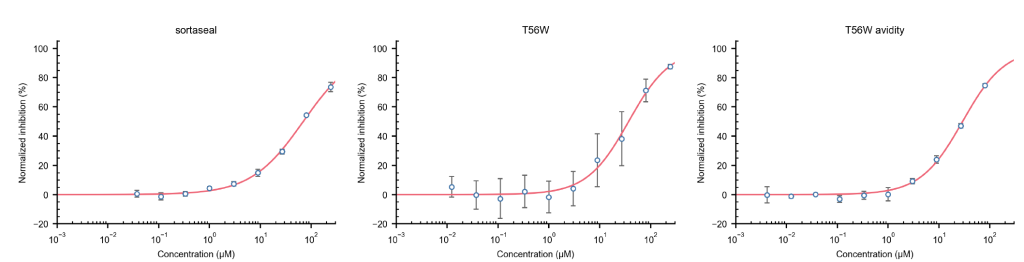
Figure 5. FRET dose-response curves show dose-dependent inhibition of SrtA activity by the SRTA series.

Figure 6. Proposed T56W avidity mechanism: small inhibitor access, SrtA-mediated self-ligation, and multivalent rebinding.
5. The avidity format produced the clearest biofilm benefit at high dose
- In crystal-violet biofilm assays, the SRTA constructs reduced S. aureus biofilm biomass across the tested dose range.
- At 27 uM, T56W avidity showed the largest effect: 62.9% inhibition with a Holm-adjusted q value of 0.001.
- At the same dose, Sortaseal showed 51.2% inhibition and T56W showed 32.1% inhibition.
- The avidity construct exceeded T56W by 30.8 percentage points at 27 uM, supporting a high-concentration avidity-associated improvement.
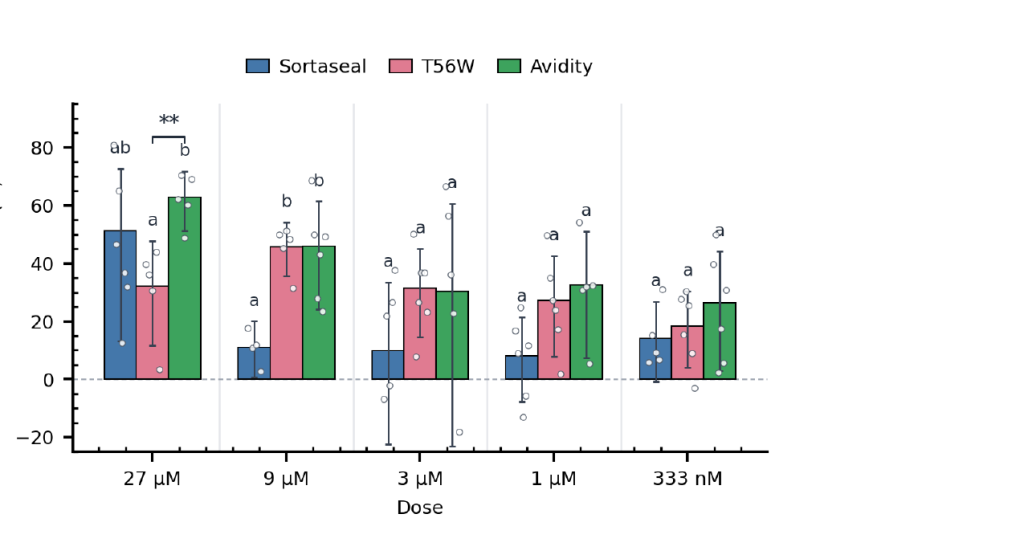
Figure 7. Crystal-violet biofilm assay: the strongest avidity-specific improvement appeared at 27 uM.
6. Biofilm inhibition was separated from general growth suppression
- Growth-curve controls did not show a matching planktonic growth defect for Sortaseal or T56W.
- Maximum growth rate and area-under-the-curve values stayed close to positive controls, suggesting that the antibiofilm effect is not simply explained by broad inhibition of planktonic growth under these assay conditions.

Figure 8. Growth-curve controls help separate biofilm inhibition from general planktonic growth suppression.
7. T56W improved survival in a C. elegans infection model
- Vehicle-treated animals showed rapid loss of survival, with 3.9 +/- 0.5% survival by day 4.
- T56W at 1 uM and 9 uM preserved day-4 survival at 79.6 +/- 18.3% and 86.9 +/- 0.5%, respectively.
- The 0.1 uM T56W condition did not materially improve survival, and C. elegans data for T56W avidity were not included in the current document.
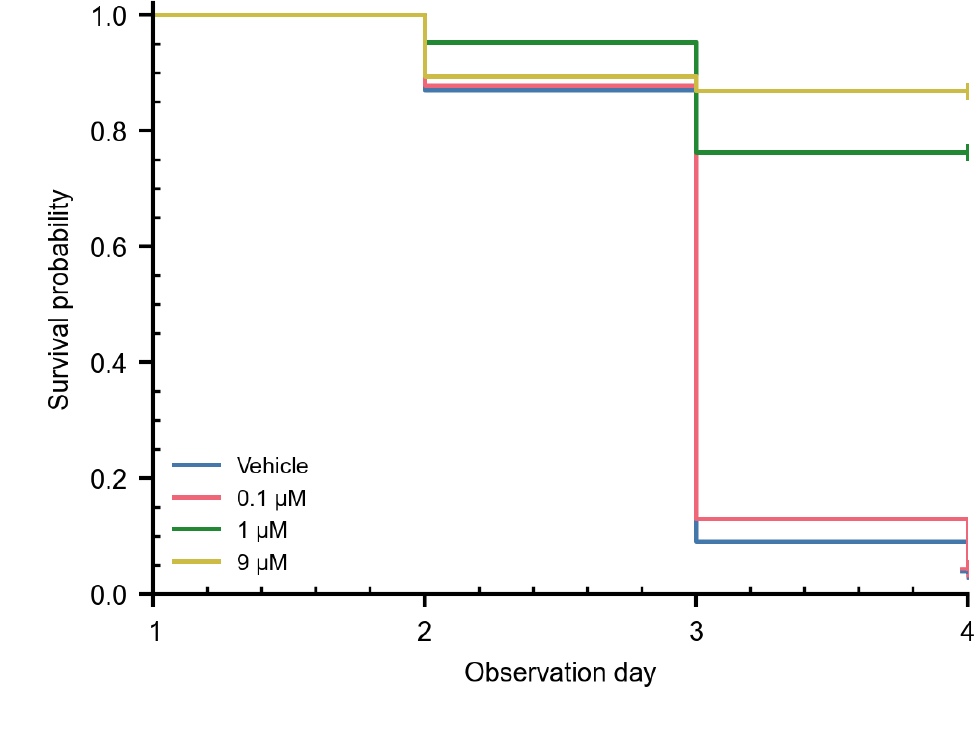
Figure 9. C. elegans survival assay: T56W at 1 and 9 uM improved survival relative to vehicle.
Why this project matters
- Overall, this study presents a compact SrtA-targeting miniprotein design series that is progressively validated from molecular properties to organism-level protection.
- The key concept is not broad bacterial killing, but functional interference with SrtA-associated surface protein anchoring and biofilm biology.
- The results support further optimization of the T56W and T56W avidity formats, especially at concentrations where the avidity effect becomes most apparent.
Suggested WordPress excerpt: A compact SrtA-targeting miniprotein series was redesigned from Parent 223 into Sortaseal, T56W, and T56W avidity. The project links surface-charge engineering, stable MD salt bridges, FRET SrtA inhibition, biofilm reduction, growth-curve controls, and C. elegans survival data into a concise anti-virulence strategy against S. aureus/MRSA-associated antibiotic resistance.
Source manuscript: main.pdf – Sortase A Inhibitors for Addressing Antibiotic Resistance in MRSA